The role of fashion in times of crisis. What is the role of fashion when we can’t go outside, when we can’t socialize? Is there a role for fashion in these times? What is it? Please read the following article and discuss any similarities or differences you find between post 9/11 vs today. What is the role of shopping, has it changed?
“The Right to Fashion In the Age of Terrorism” by Minh Ha T Pham
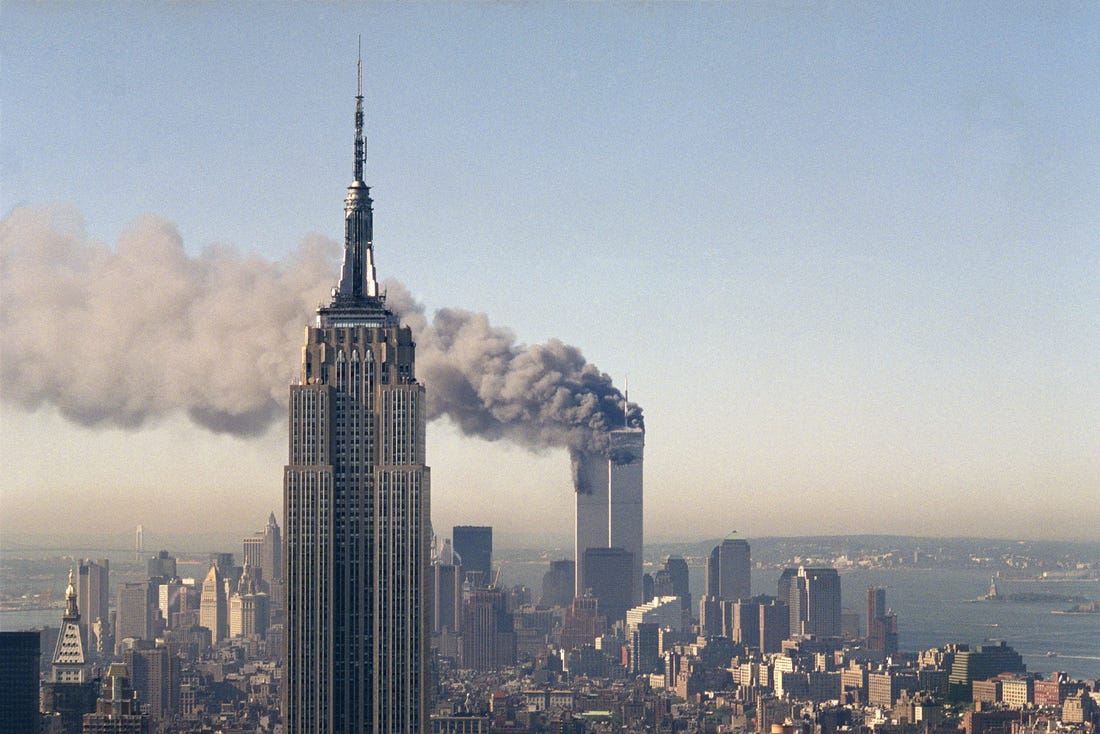
The World Trade Center’s terrorist attack marked a before and after in the history of New York and the United States. It was a day when everyone stood up in the face of a catastrophe that would leave thousands of victims and two huge footprints on the ground in southern Manhattan.
In Pham’s article, several witnesses describe how anything other than life or death became insignificant after that day. When the Twin Towers collapsed, the entire planet fell silent, paralyzed for a moment. No one could then prosecute the scope of the terrorist attack that would change the world forever.
The consequences upset the global geopolitical balance but also influenced much more everyday aspects, from the way we fly at airports to the shoes we would wear from then on: nothing was ever the same.
Literally, after 9/11, New York’s most exclusive boutiques noticed a surge in demand for low-heeled shoes. The women wanted shoes that they could wear to run if necessary.
Fashion draws the times, the dreams and the fears that we live.
Coco Chanel
It’s a little footnote to the story, but the 9/11 terrorist attacks happened on the fourth day of New York Fashion Week, which then featured the collections for Spring 2002. The tents were evacuated from the Lincoln Center where all the parades scheduled on the calendar were celebrated and canceled.
Those attacks changed the lives of millions of people and radically impacted the New York fashion industry as well. If the brands did not present their collections, the buyers would not acquire their articles for the stores and that would mean lean times in the spring of the following year.
For this reason, in the days that followed the attacks, each one did what they could. Great designers like Ralph Lauren, Michael Kors, and Oscar De la Renta organized simple presentations in their showrooms, while younger brands with limited financial resources had no viable options either before buyers or before the press.
It seemed unlikely that his businesses would survive since, during a climate of fear and economic uncertainty, nobody thought about buying clothes. As a solution to this crisis, on September 21st Vogue USA presented “An American View”, a joint presentation of eleven brands, and although it was a small event without pomp, it represented something full of meaning. For the first time in such a competitive industry, fashion was fighting together to survive.
Today, at the moment of the world crisis that we are experiencing due to the COVID-19 pandemic, fashion has not perceived the same impact that it had when the Twin Towers collapsed. This difference is due to several factors, starting with the fact that COVID-19 is not a terrorist attack and, therefore, people are not having the same kind of fear that New Yorkers had on 9/11.
Terrorism attacks the liberties of each individual and, among them, is the freedom to buy and consume. At the time of the collapse of the towers in the World Trade Center, people no longer dared to buy, although the same government encouraged the population to go out and continue living normally, because if they had not “they (Al Qaeda) would have won”.
Now people are not terrified by the human violence that could be experienced in New York’s attack. Consumers continue to hope that this situation will be resolved soon and that it is in their own hands to stop the virus by staying home. Therefore, fear and the need to escape and flee is not reflected, in this case, in fashion.
Even though in both cases we are talking about crises, the causes that provoke them are different. The new coronavirus has forced people to not be able to leave home even to work, so all the daily and essential activities, such as working or studying, are taking place in the digital world.
Conferences, video calls or documents shared in the cloud: this is how the population continues to live in these times of crisis. And fashion? By not having to go out, you don’t need to get dressed every day, but many people are already getting tired of their pajamas and are getting back to dressing and putting on makeup as they did before the pandemic, even if it is simply to attend a Zoom video call.
Clothing stores are temporarily closed, so the only way to buy is online. Despite the great advantage of having an entire online catalog to choose clothing presses, some people prefer not to buy at the moment for various reasons. Some say that they do not know when they will be able to leave the house, in the spring or summer, so there is no point in buying clothes for a season and not being able to wear them on the street.
Other people argue that it is not correct that orders are made online and a delivery person puts their health at risk to bring the package to our homes. There is a part of the population, on the other hand, who has lost its jobs and can not spend or who is prudent and, not knowing the post-coronavirus economic situation, prefers to save money.
The interpretations are not always the same since it is a global crisis and each country is experiencing it differently. We can talk about fashion in times of crisis from different points of view, but, like Anna Wintour, editor-in-chief of American Vogue and doyenne of American fashion, wrote in the November 2001 issue of Vogue:
Fashion is essential in these difficult times, paradoxically, to keep us in touch with our dreamy, fanciful, self-pleasing natures.
Anna Wintour
 A Day in the Life